
Report on the Academic Lecture on Indian Knowledge Systems (IKS)
Theme: Bharatiya Gyan Parampara: Philosophy, Living Ethos, and NEP 2020 Integration
Organized by: Department of Political Science
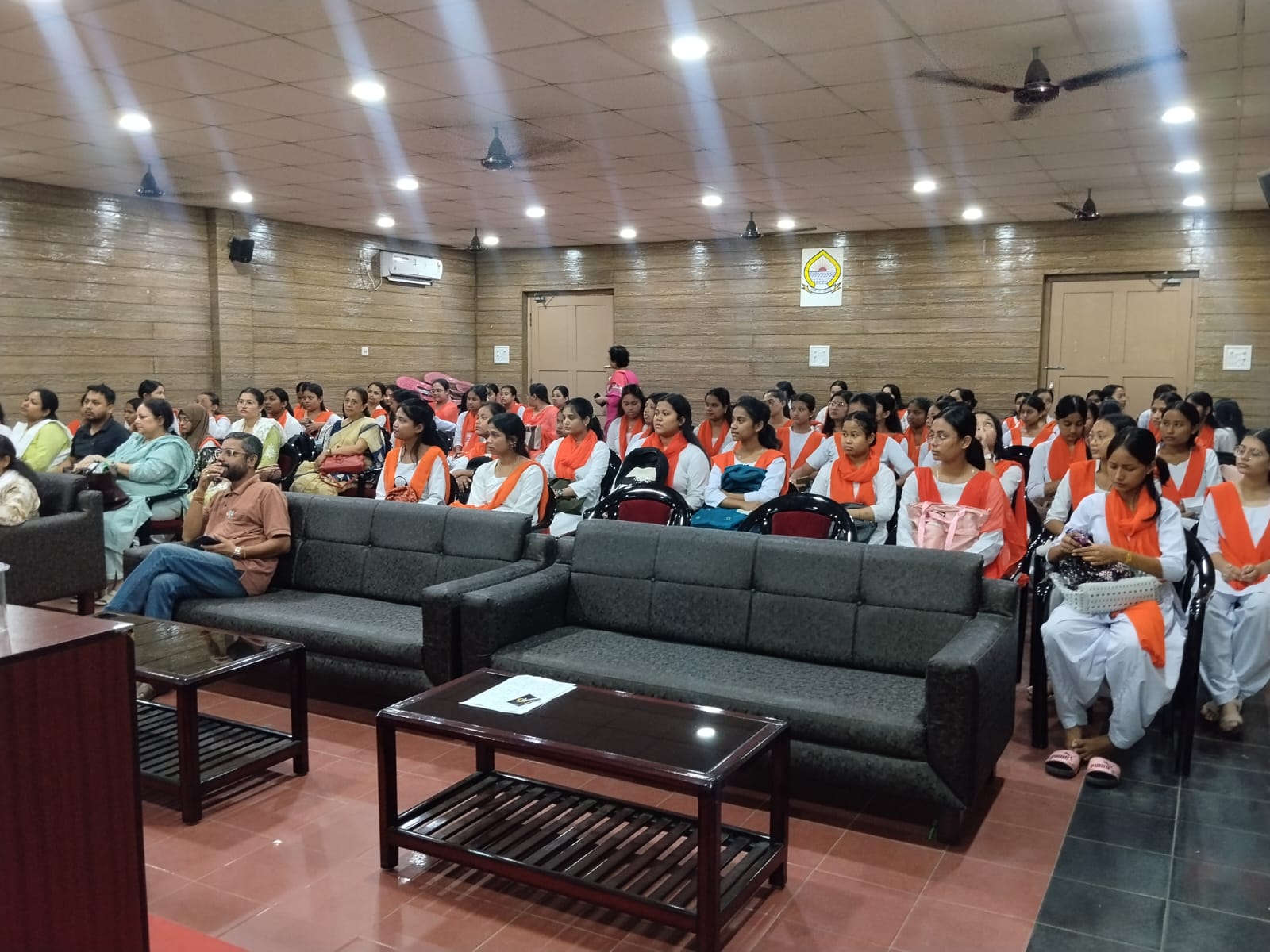
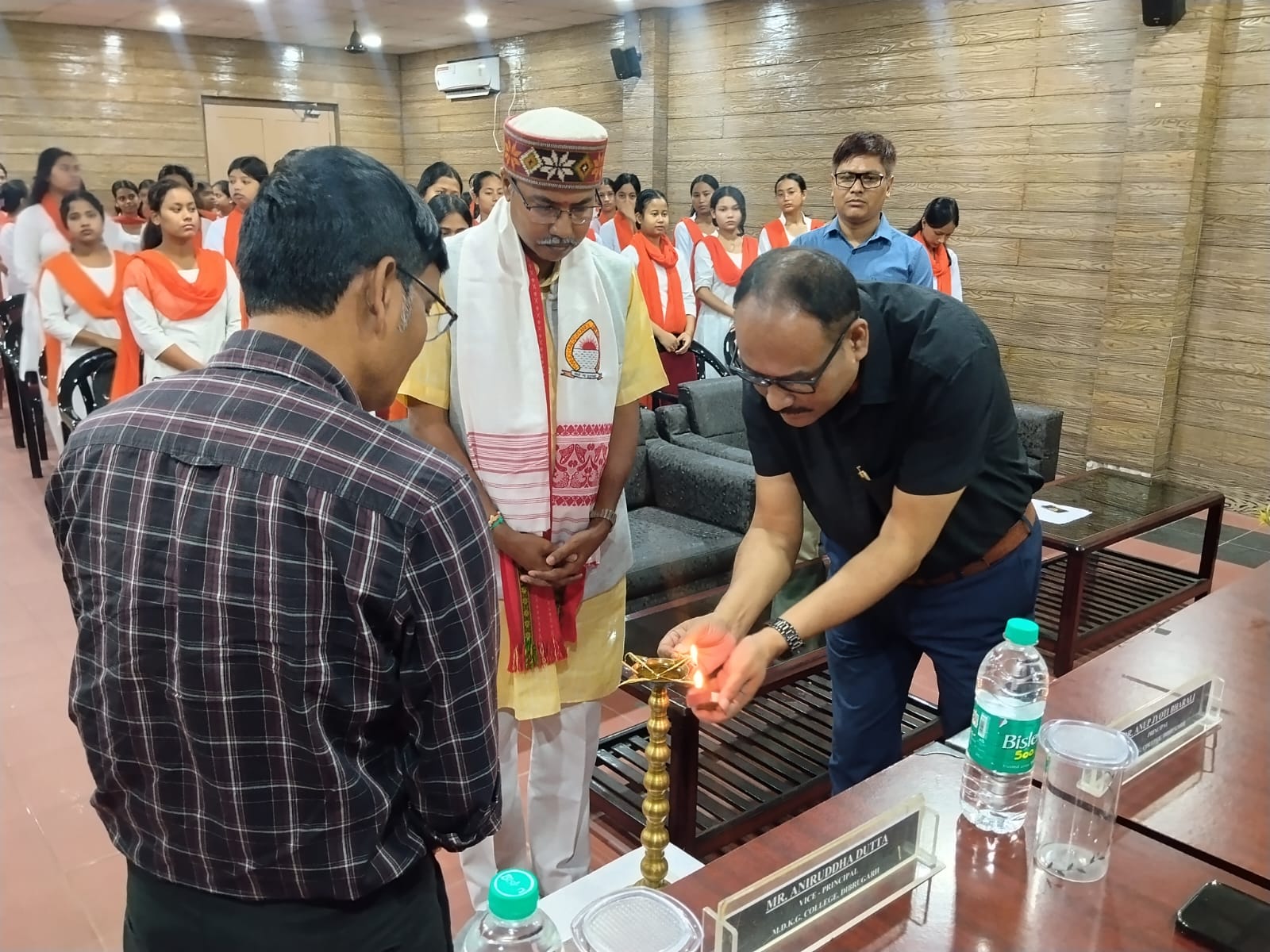
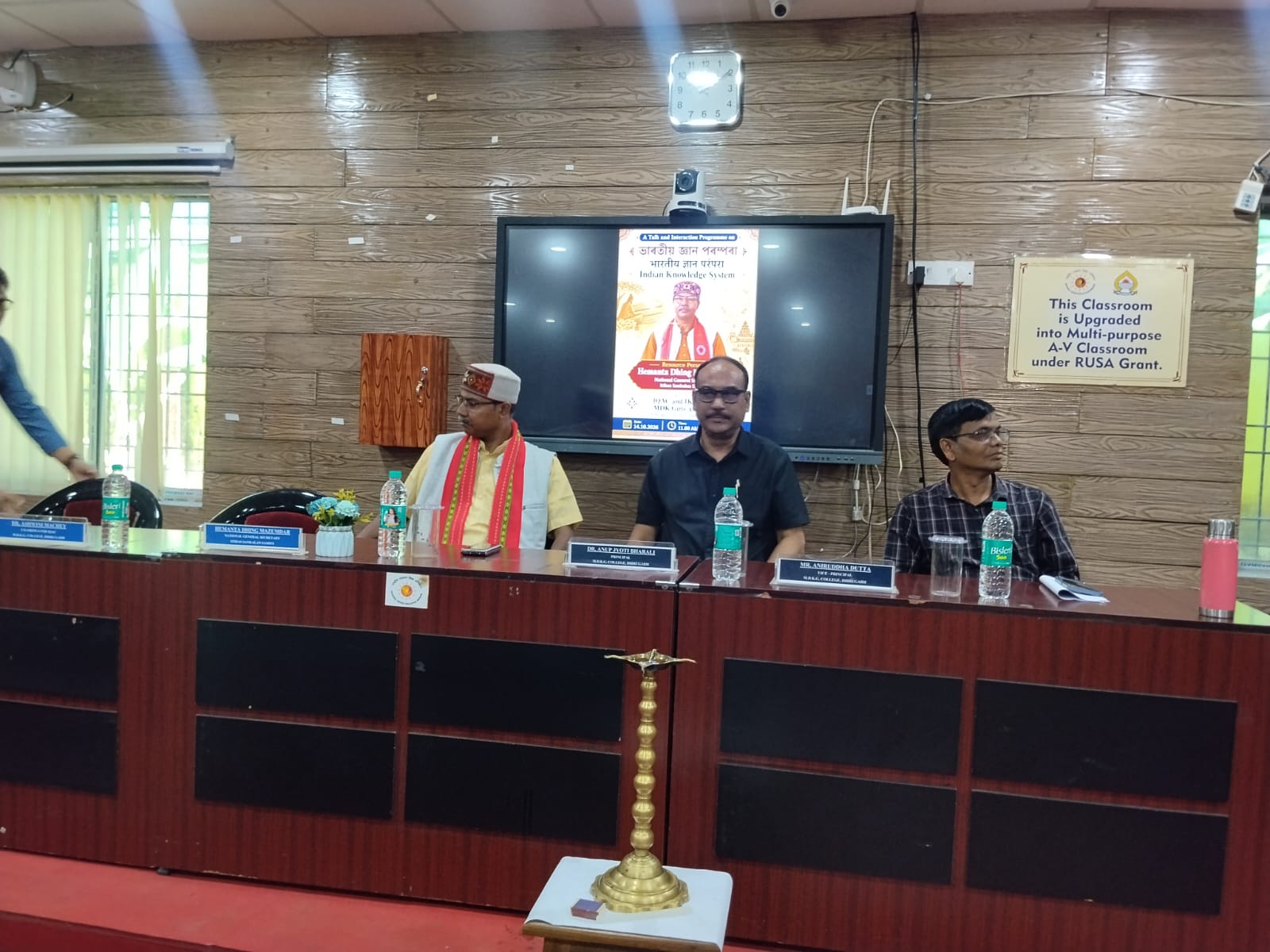
An academic lecture dedicated to the exploration and educational integration of the Bharatiya Gyan Parampara (Indian Knowledge Systems – IKS) was organized by the Department of Political Science. The event commenced with a formal inaugural address delivered by the Principal, Dr. Anup Jyoti Bharali. In his address, Dr. Bharali underscored the critical need for modern higher education institutions to reconnect with indigenous intellectual and cultural traditions. He remarked that academic excellence achieves its highest potential when anchored in moral consciousness, holistic inquiry, and a deep appreciation of civilizational heritage, commending the department for organizing a forum centered on such a timely and transformative theme.
Following the inaugural address, the Vice Principal, Mr. Aniruddha Dutta, formally introduced the invited Resource Person to the gathering. Mr. Dutta detailed the speaker’s scholarly achievements, dedicated research in Indian traditions, and sustained contributions to curriculum design and higher education pedagogy. The proceedings were coordinated and moderated by Dr. Anita Sharma, who established the conceptual framework for the session. In her opening remarks, Dr. Sharma noted that Indian Knowledge Systems should not be viewed merely through an archival or antiquarian lens, but rather as an active, rational, and evolving body of knowledge capable of addressing contemporary societal and philosophical questions.
Delivering the keynote address, the Resource Person presented an extensive overview of the Bharatiya Gyan Parampara, elucidating its continuous and diverse intellectual lineage spanning governance, ethics, astronomy, environmental stewardship, mathematics, and linguistics. The speaker emphasized that ancient Indian traditions were fundamentally grounded in rigorous empirical observation, logical inquiry (Tarka), and vibrant traditions of philosophical debate (Vada-parampara). Central to this intellectual foundation is the distinct Bharatiya way of life, which eschews anthropocentric domination and instead embraces all living beings within an interconnected cosmic order. Rooted in ideals of universal harmony and compassionate duty (Dharma), this ethos views human existence as inseparable from the welfare of the broader natural world, fostering deep ecological consciousness and societal balance.
The speaker then addressed the vital significance of integrating IKS into modern curricula, explaining that it serves as an indispensable tool for decolonizing educational paradigms and nurturing balanced critical thinking. Moving beyond superficial appreciation, the speaker highlighted the imperative of systematic institutional planning and deep textual study. It was emphasized that a rigorous understanding of IKS requires strategic curricular development, capacity building for educators, translation of classical and regional treatises, and the application of modern research methodologies to traditional wisdom, ensuring that ancient insights actively contribute to contemporary knowledge creation.
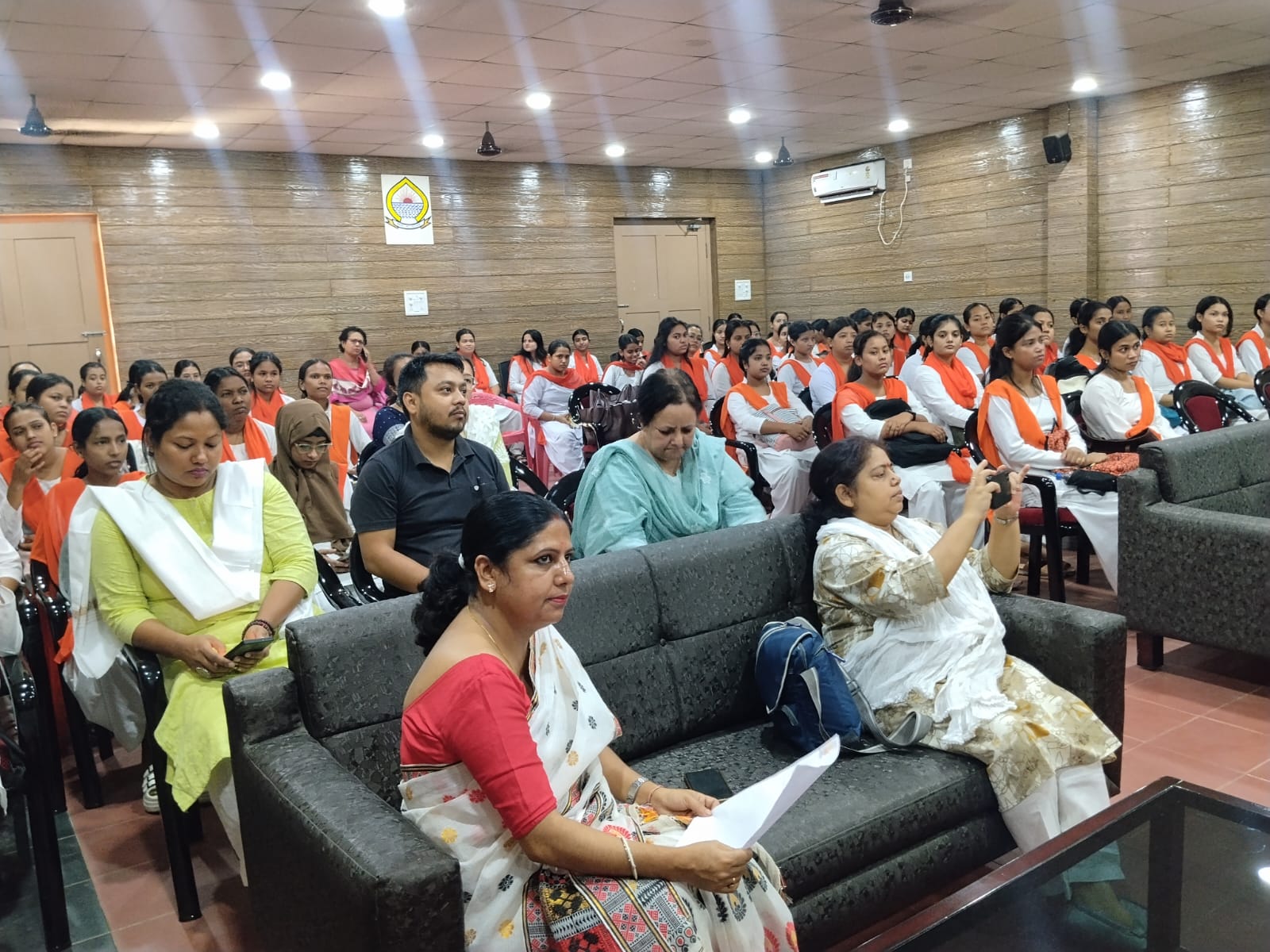
Connecting these philosophical and pedagogical foundations to policy reform, the speaker illustrated the deep synergies between IKS and the National Education Policy (NEP) 2020. It was noted that NEP 2020 explicitly envisions an education system rooted in Indian ethos while addressing global challenges, positioning multidisciplinary learning, indigenous epistemologies, and value-based education at its core. Following the lecture, an engaging interactive discussion took place, wherein faculty members and students posed thoughtful questions regarding practical classroom integration, cross-disciplinary syllabus formulation, and the documentation of regional knowledge traditions, all of which the speaker addressed with insightful examples.
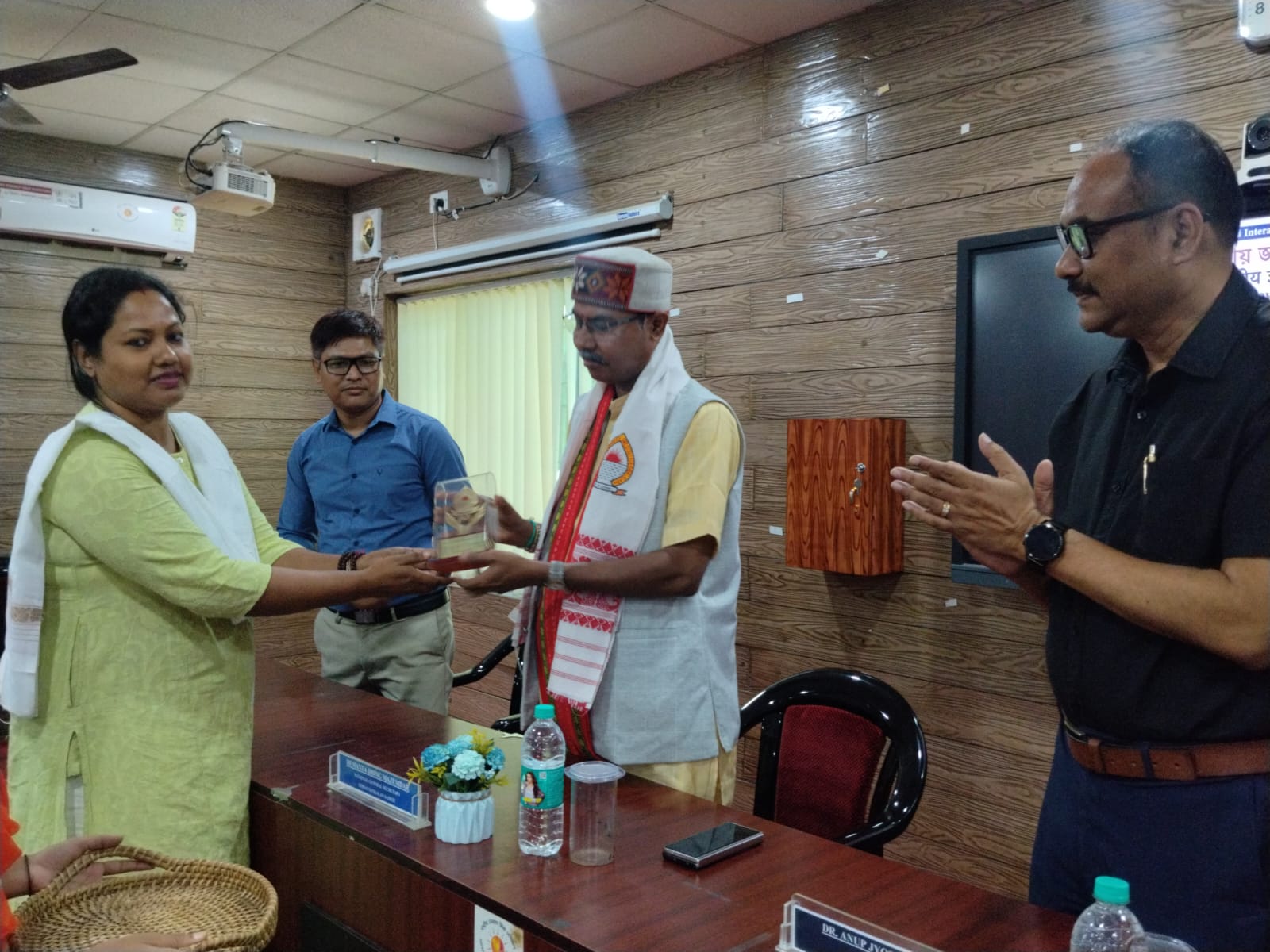
The program concluded with a formal Vote of Thanks proposed by Dr. Aswini Machey. Dr. Machey conveyed sincere gratitude to the Resource Person for the illuminating and comprehensive discourse, while also expressing appreciation to Principal Dr. Anup Jyoti Bharali and Vice Principal Mr. Aniruddha Dutta for their administrative guidance and support. He further extended thanks to the moderator, Dr. Anita Sharma, the organizing committee, faculty colleagues, and students for their active involvement, bringing an intellectually enriching and impactful academic program to a successful close.
 Users Today : 98
 Total Users : 78367
 Total views : 191571