
National Unity Day 2026 Observed by the Department of Philosophy in association with IQAC, MDKG College
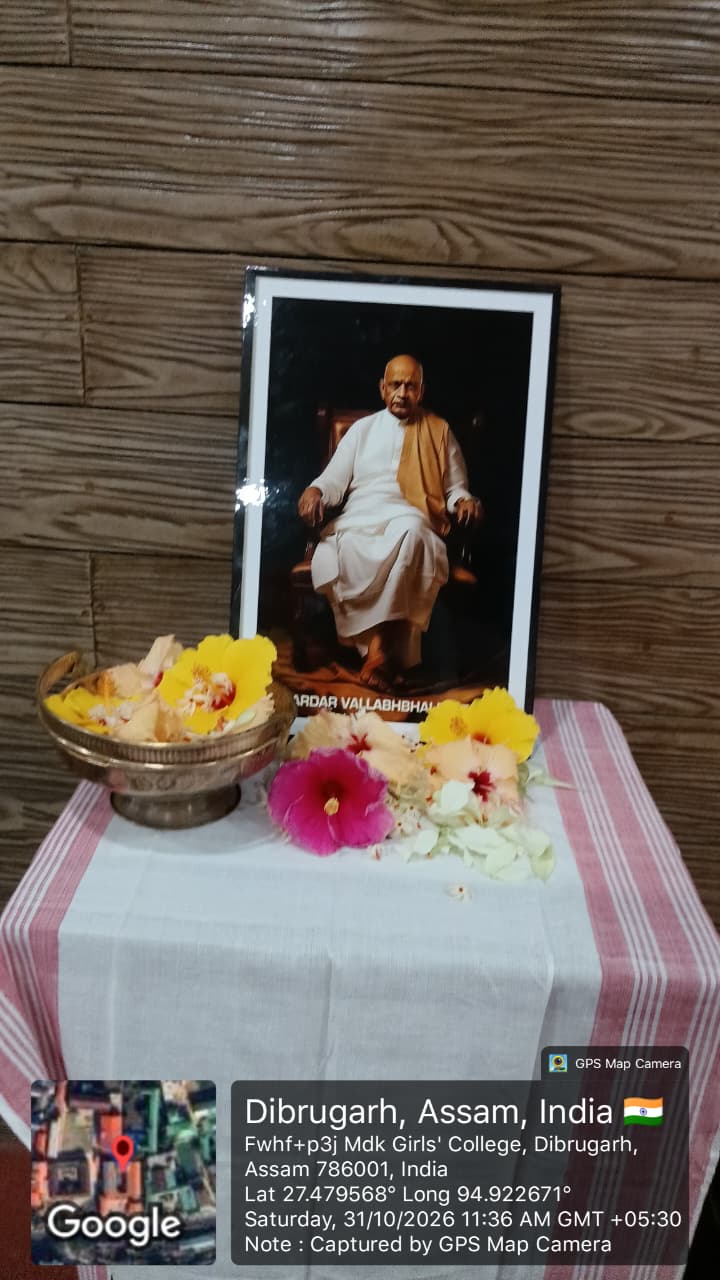
The Department of Philosophy, in association with the Internal Quality Assurance Cell (IQAC), Manohari Devi Kanoi Girls’ College, Dibrugarh, observed National Unity Day 2026 on 31 October 2026 with enthusiasm and active participation from students and faculty members. The programme commenced with a floral tribute to the portrait of Sardar Vallabhbhai Patel, popularly known as the Iron Man of India, followed by the rendition of the Unity Song by Dr. Sikhajyoti Borthakur, Teaching Associate, Department of Sanskrit.
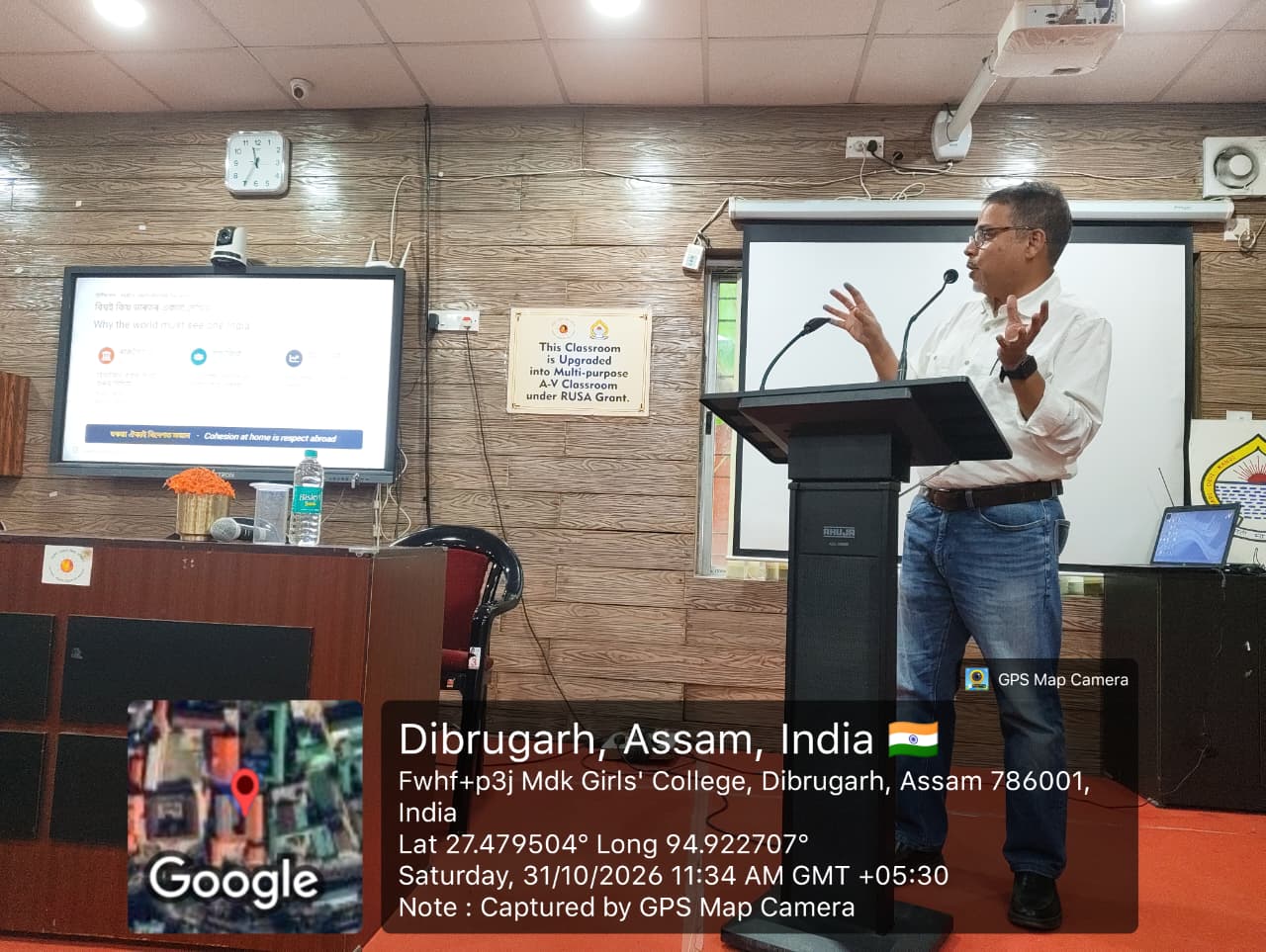
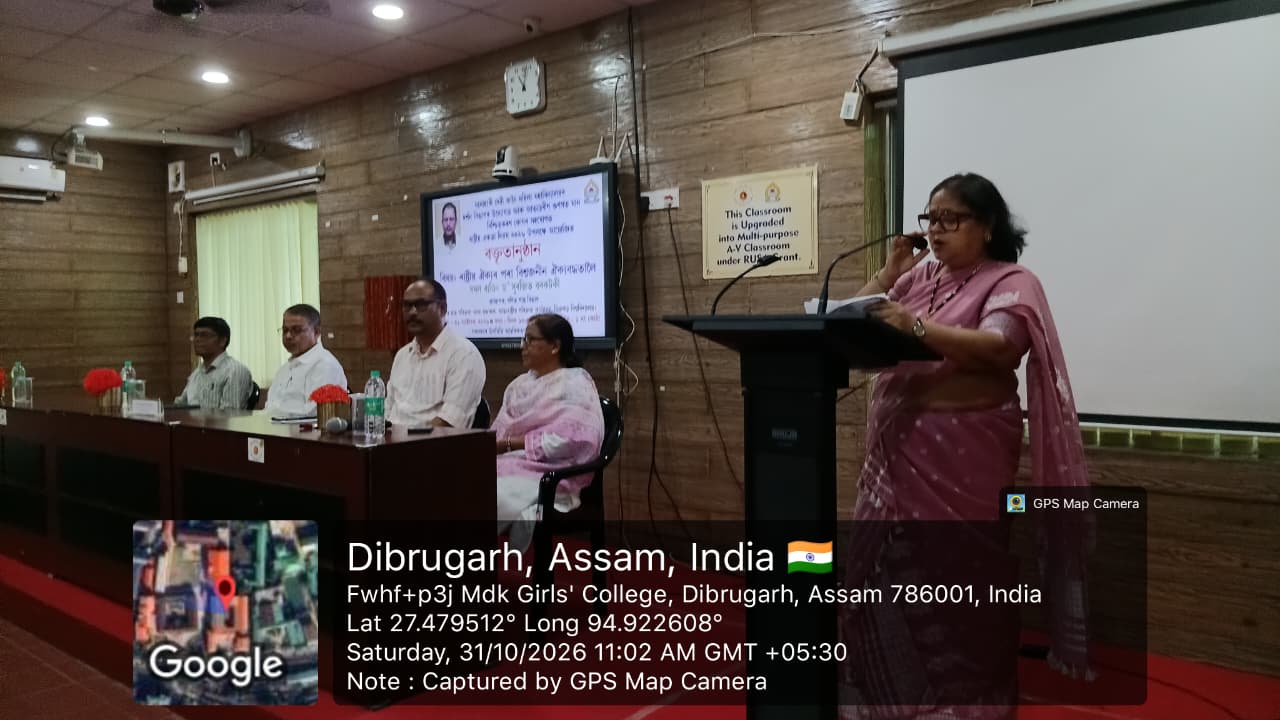
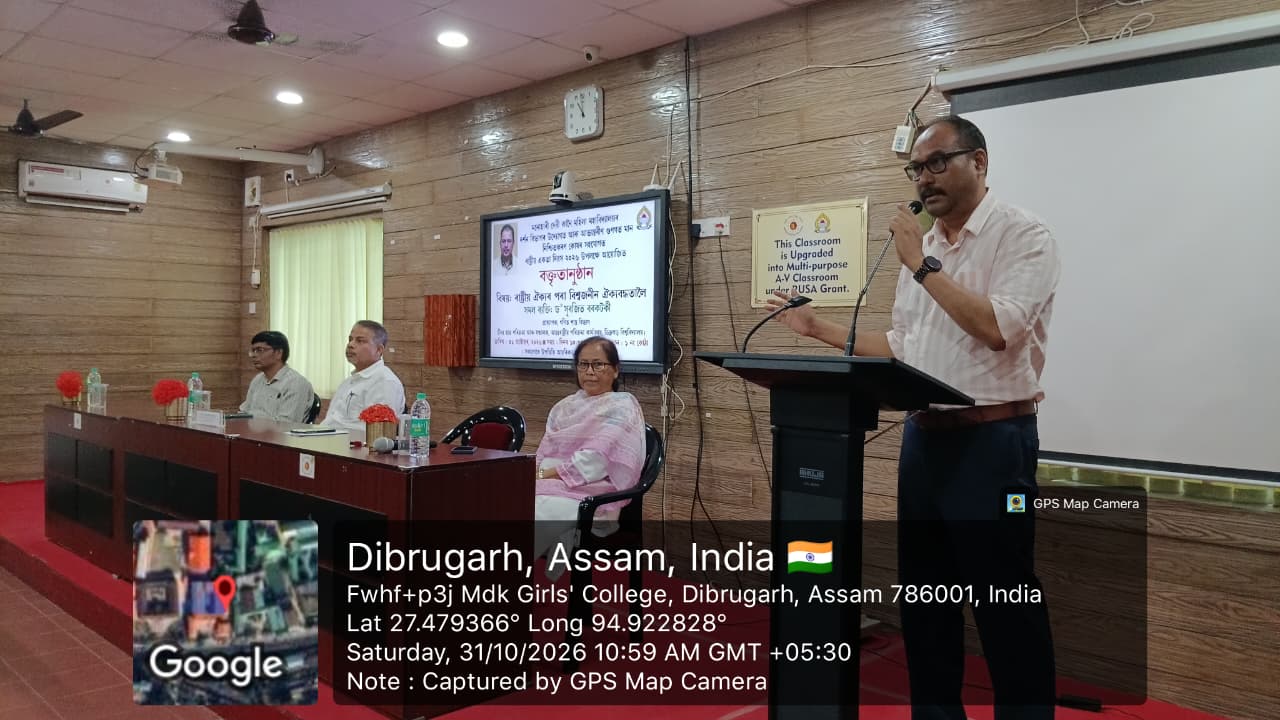
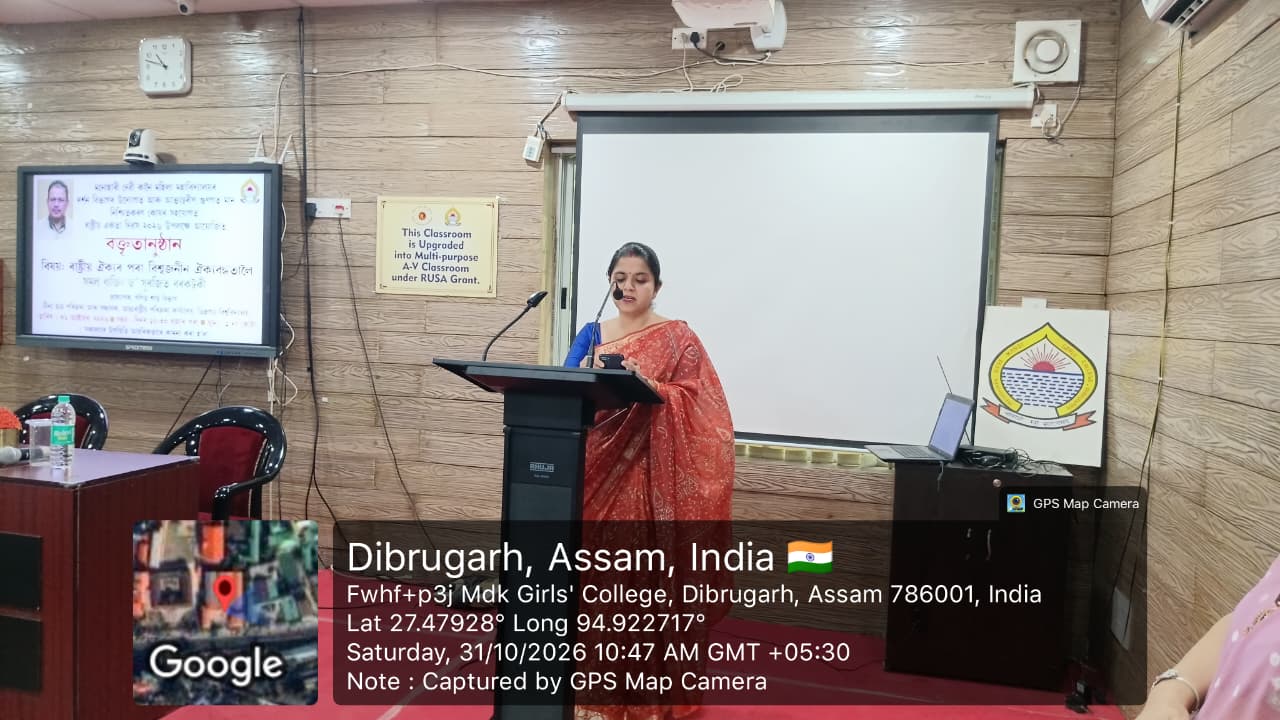
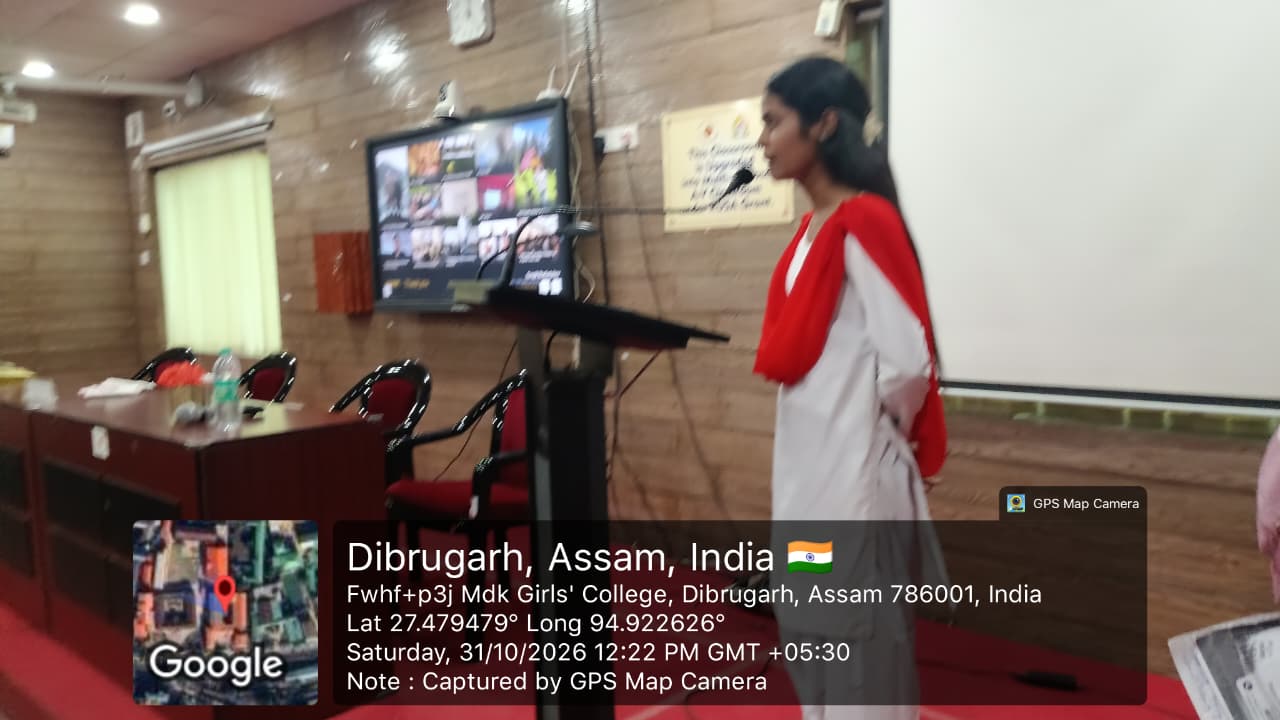
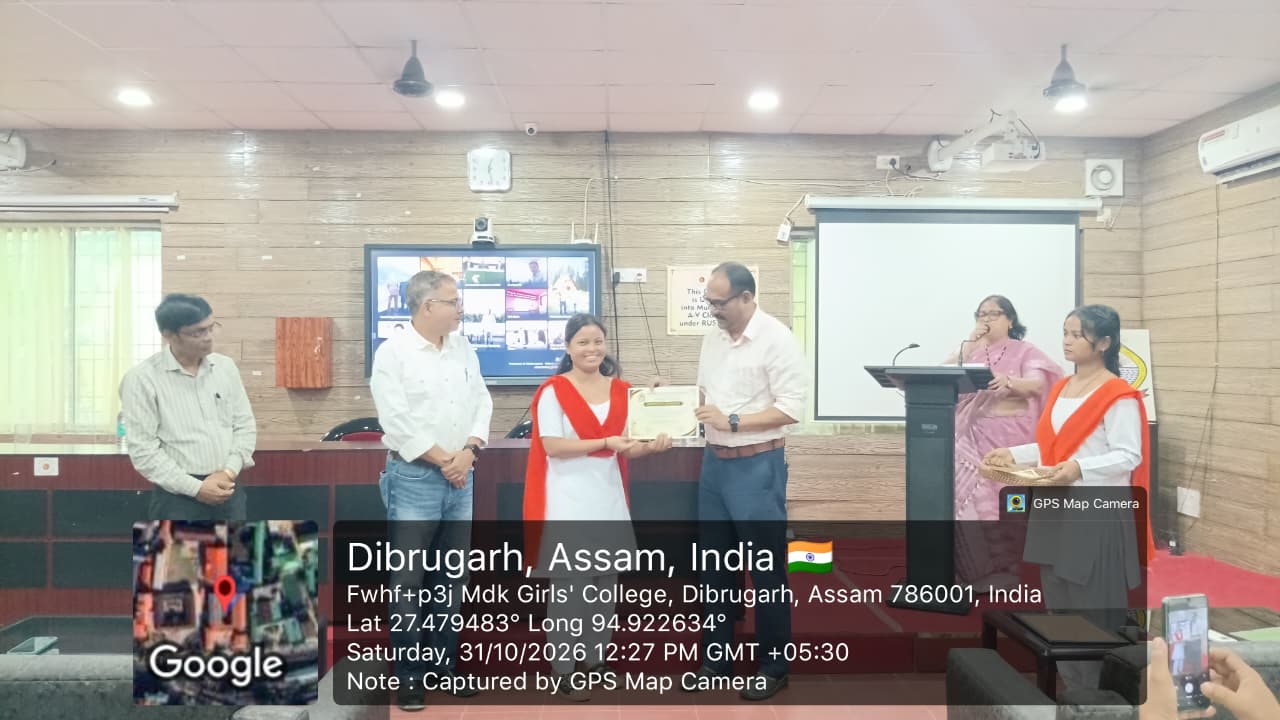
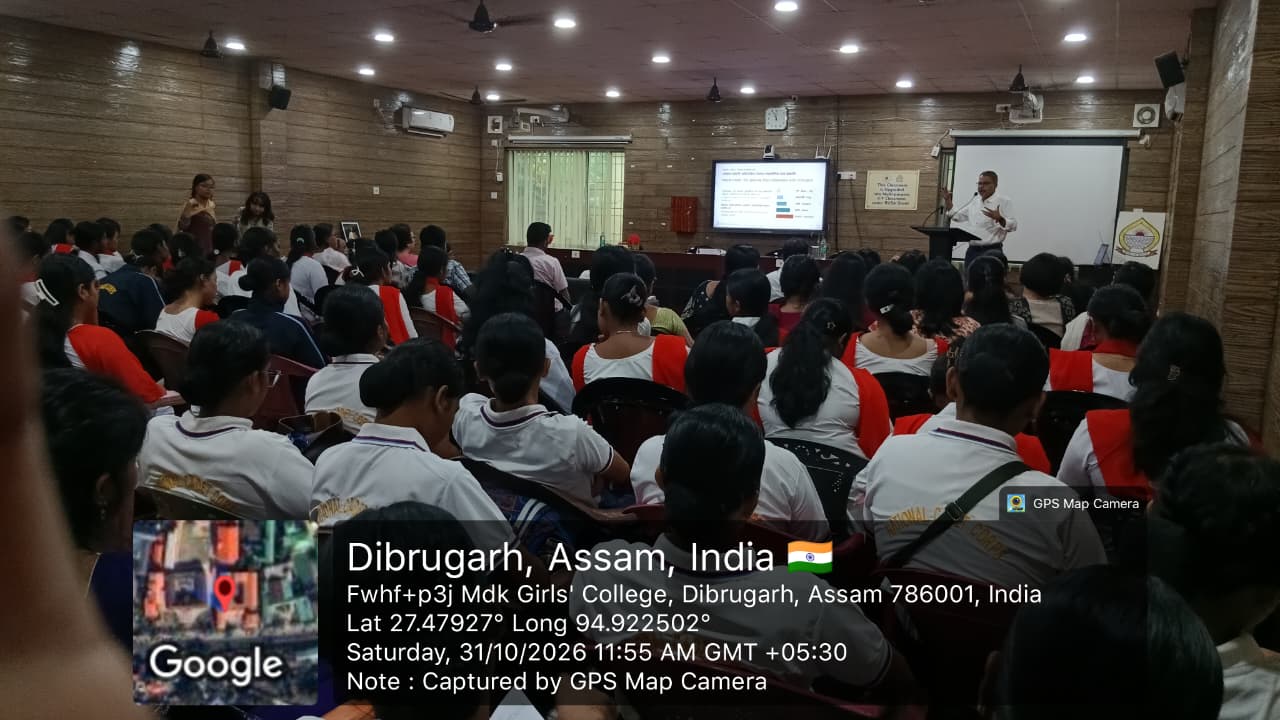
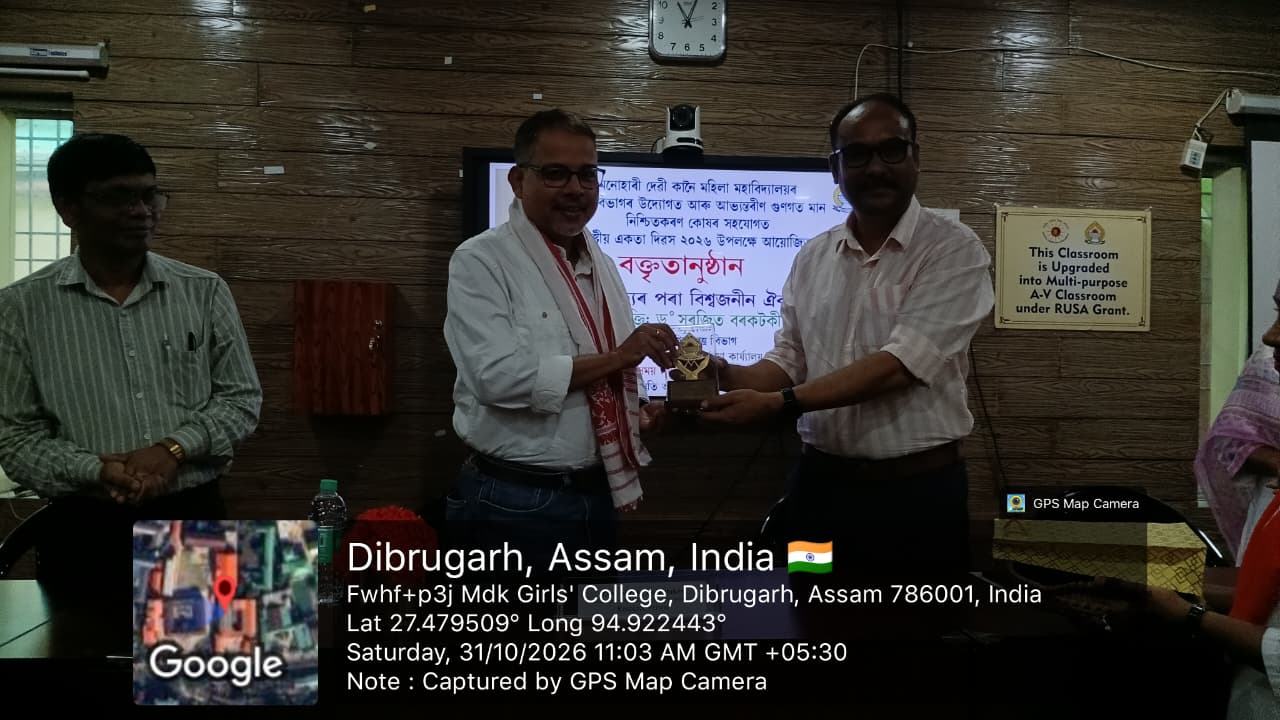
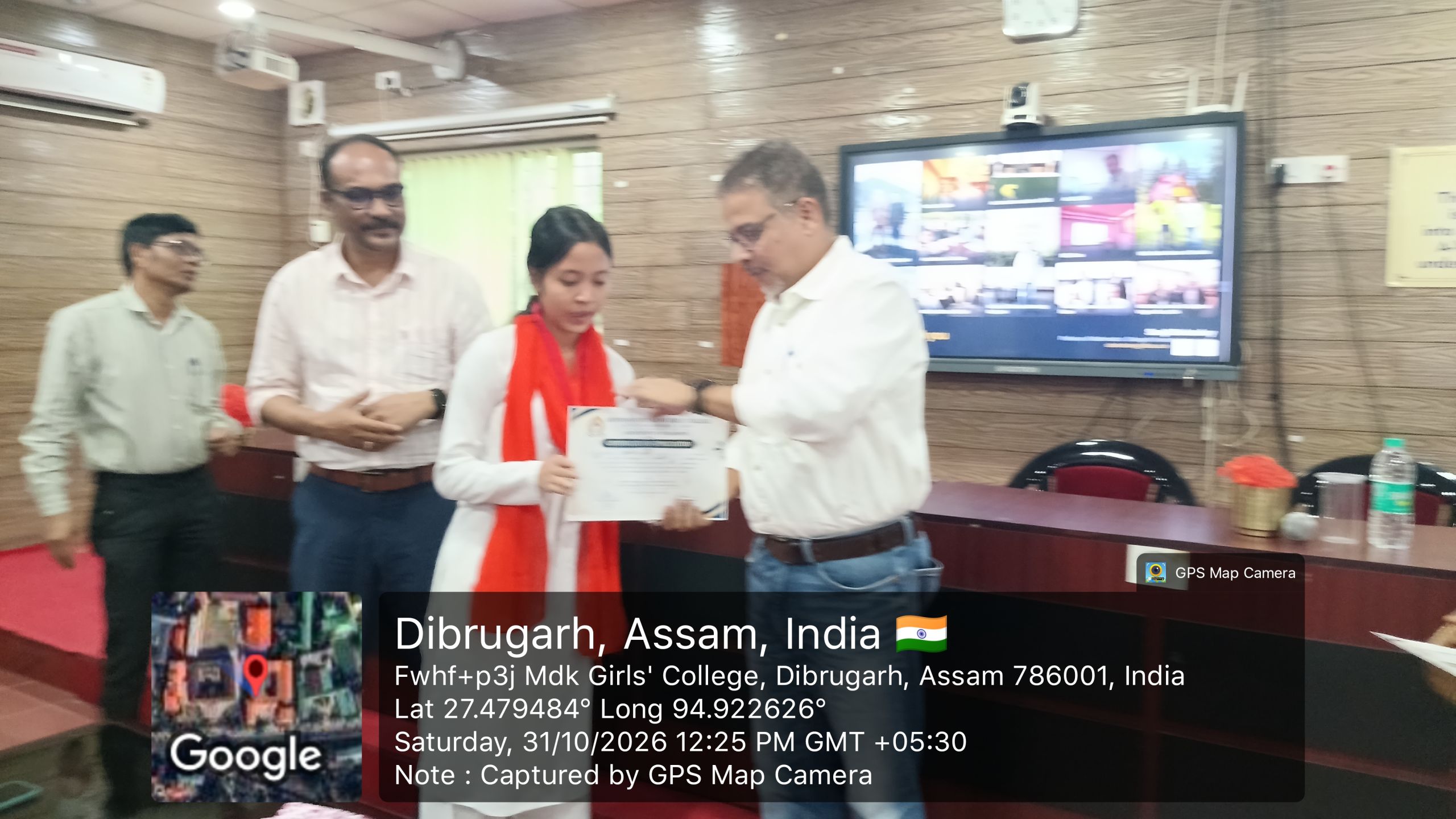
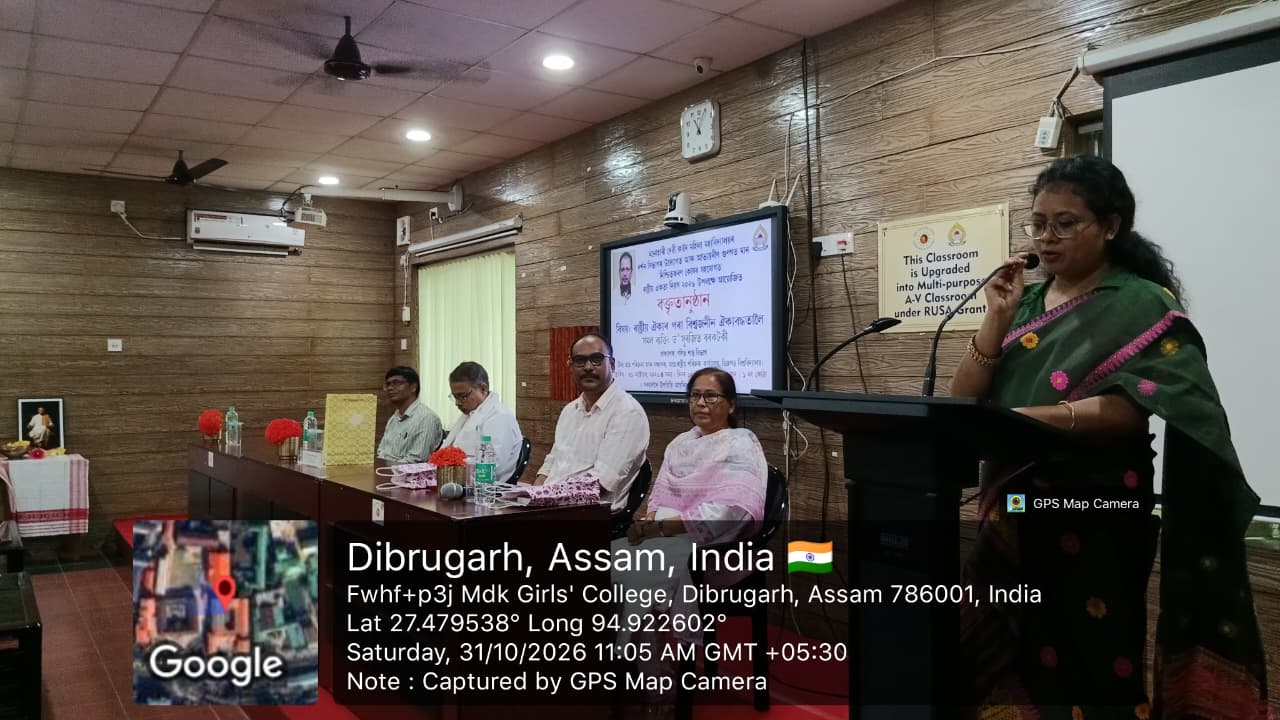
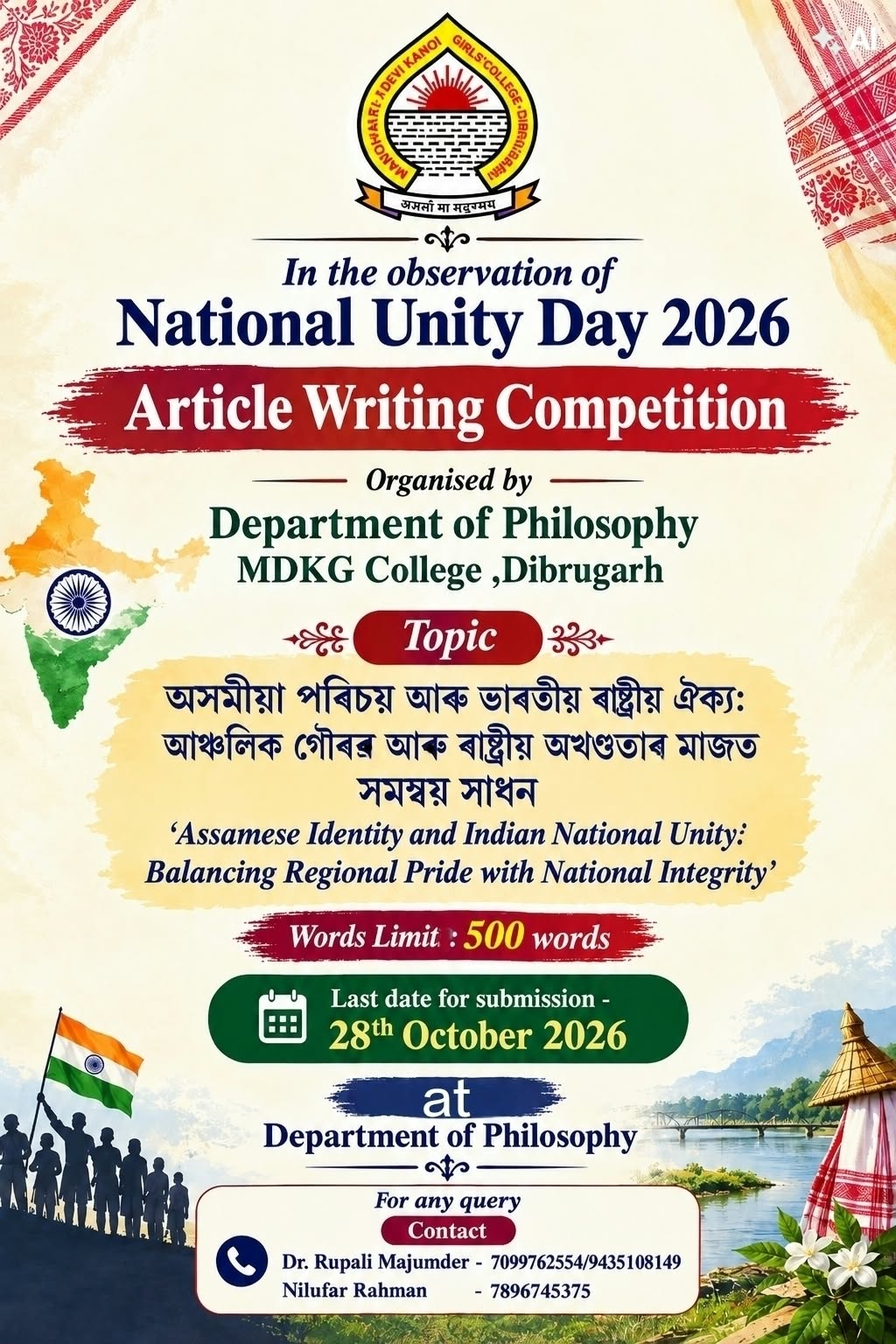
The welcome address was delivered by Dr. Rupali Majumder, Head of the Department of Philosophy. Dr. Anup Jyoti Bharali, the Principal of the College in his inaugural address highlighted the remarkable contribution of Sardar Vallabhbhai Patel to the political integration of India after independence. He emphasised Patel’s visionary leadership, determination and diplomatic efforts in bringing together the princely states and laying the foundation of a united and integrated India. He also underscored the continuing relevance of national unity, particularly in a diverse country like India. The programme was also graced by the presence of the Vice-Principal, Mr. Anirudha Dutta, and the Academic Supervisor of the Science Stream, Dr.Juli Konwar. As part of the observance, an invited lecture was organised on the theme ‘From National Unity to Universal Unity’, delivered by Professor Surajit Borkotokey, Department of Mathematics, Dibrugarh University, Dean, Students Affairs, Director, Office of the International Affairs, Senior Visiting Research Fellow, Corvinus Institute for Advanced Studies, Budapest, Hungary. The objective of organizing lecture program was to motivate young minds to explore how individuals and societies, while remaining rooted in their regional and national identities, can move towards the larger ideal of universal unity and the unity of humankind. Ms. Manikha Konwar, Assistant Professor, Department of Assamese, introduced the students and audience to the distinguished invited speaker, Prof. Surajit Borkotokey, highlighting his remarkable academic achievements and outstanding contributions to the field of education, international collaboration and research. Beginning with the historic contribution of Sardar Vallabhbhai Patel in integrating the princely states and other regions to establish modern India, Professor Borkotokey highlighted the importance of preserving regional and national identities while simultaneously cultivating a universal outlook. He inspired the young audience to recognise that the pursuit of knowledge and academic excellence transcends geographical, cultural and national boundaries, bringing people and nations together through shared intellectual endeavours. Drawing insights from the Harappan Civilisation and Vedic wisdom, he reflected on the enduring intellectual and cultural foundations that can guide humanity towards universal unity. Referring to Yuval Noah Harari’s Sapiens, he highlighted the idea that the ability to unite beyond the immediate circles of familiarity is one of humanity’s oldest strengths. His lecture offered an insightful perspective on the possibility of moving from regional identity to national solidarity and, ultimately to universal human fellowship. The lecture was followed by an interactive session in which students enthusiastically engaged with the resource person and expressed their views on national unity, regional identity and universal solidarity. The lively interaction and active participation of students made the session particularly engaging and meaningful. On the occasion, the Department of Philosophy also organised an intra-college article-writing competition on the topic “Assamese Identity and Indian National Unity: Balancing Regional Pride with National Integrity.” The winners were felicitated with certificates and medals in recognition of their achievements. The programme witnessed the participation of approximately 90 students. The enthusiastic involvement of students, meaningful academic deliberations and vibrant interaction throughout the event contributed to the overall success of the observance. The programme concluded with vote of thanks by Nilufar Rahman and commitment to the values of unity, diversity, mutual respect and universal human solidarity.
 Users Today : 58
 Total Users : 80897
 Total views : 195763